GOOOLLL
Articles
← All articles
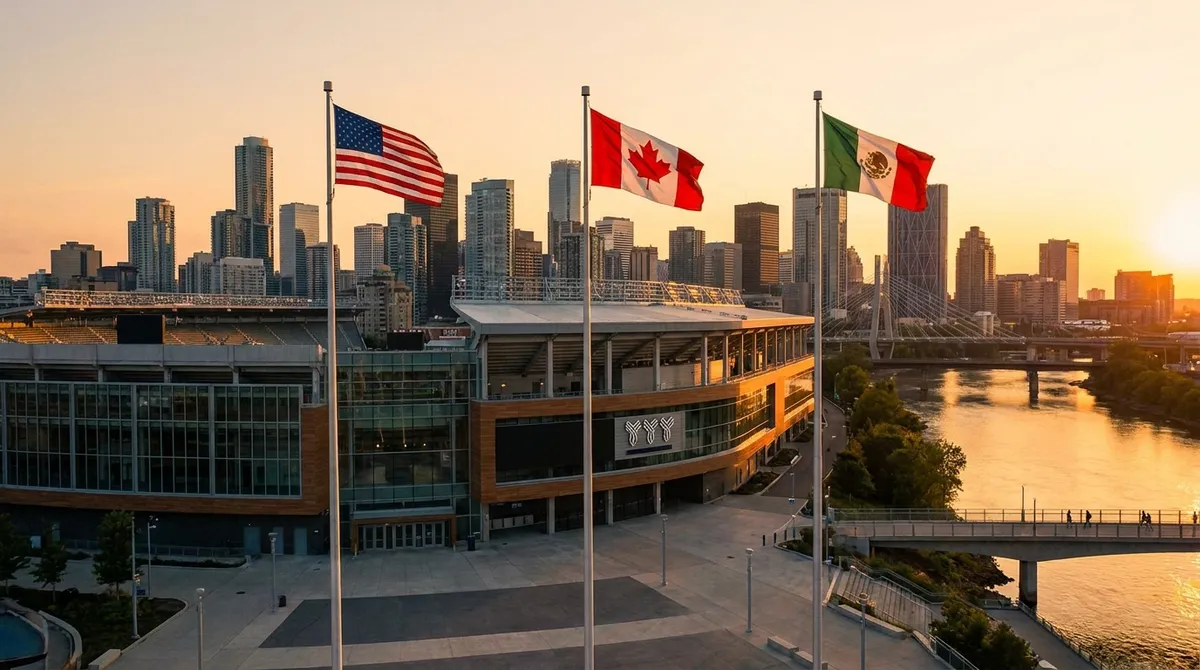
Three hosts, 16 cities: how the USA, Canada and Mexico stage WC 2026
May 22, 2026
Gooolll Desk
The 2026 World Cup is the first to be co-hosted by three countries. Sixteen cities across the United States, Canada and Mexico share 104 matches, making it the most geographically sprawling finals ever — a continental tournament rather than a national one.
Eleven cities in the United States
The United States carries the bulk of the load with eleven host cities: Atlanta, the Boston area (Foxborough), the Dallas area (Arlington), Houston, Kansas City, the Los Angeles area (Inglewood), Miami, the New York/New Jersey area (East Rutherford), Philadelphia, the San Francisco Bay Area (Santa Clara) and Seattle. These are large, modern stadiums, several of them NFL venues with retractable roofs or climate considerations that shape kick-off times in a North American summer.
Canada and Mexico
Canada hosts in two cities — Toronto and Vancouver — bringing World Cup football to the country for the first time. Mexico returns as a host for a record third time, with matches in Mexico City, Guadalajara and Monterrey. Mexico's involvement carries real history: the Estadio Azteca in Mexico City becomes the first stadium to feature at three different men's World Cups, having already hosted in 1970 and 1986.
Where the marquee matches land
The tournament is built around two symbolic anchors. The opening match is staged in Mexico, with the Estadio Azteca the natural centrepiece of the launch — a nod to the competition's heritage. The final is played in the New York/New Jersey area at MetLife Stadium, one of the largest venues in the field, placing the showpiece in the media and commercial heart of the United States.
Spreading a World Cup across three countries and four time zones is a logistical undertaking. Teams and travelling fans face long internal journeys, and organisers group early-stage fixtures regionally where possible to limit travel before the knockouts. Climate varies enormously too — humid heat in Houston and Miami, mild Pacific air in Vancouver and the Bay Area, altitude in Mexico City.
For all the complexity, the three-host model is a statement about the modern game's scale. It pools the infrastructure of North America's biggest markets and puts the World Cup in front of an enormous combined population. The map is bigger than ever — and following which city hosts which stage is part of planning any trip to the 2026 finals.
gooolll