GOOOLLL
Articles
← All articles
The Tactical Shift 2026 Exposed: Why Crossing from the Byline Became the Tournament's Hidden Weapon
July 9, 2026
Gooolll Desk
Everyone wanted to talk about Messi's eight goals. Mbappé's seven. The usual circus.
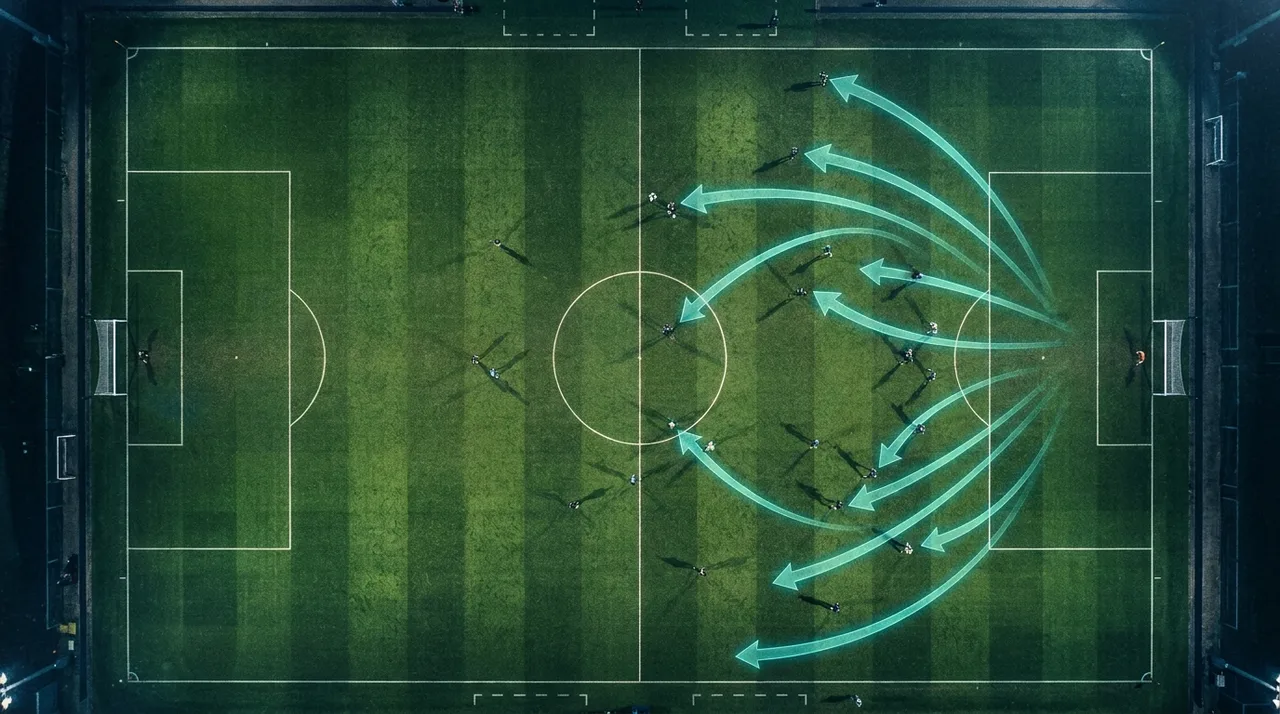
Fine. But while the discourse chased individual brilliance through the group stage, something quieter and considerably more interesting was happening along the flanks — in the unglamorous, largely unsung work of fullbacks getting to the byline and whipping crosses into dangerous territory. Three nations cracked this code before the tournament began. Their standings aren't coincidental.
Spain finished atop Group H: 7 points, +5 goal differential. Japan sits second in Group F with 5 points and +4. Sweden scraped 4 points in that same group — not a glittering return, but their offensive architecture tells a richer story than the table suggests. What connects them isn't a superstar or a pressing philosophy borrowed from Klopp. It's fullbacks treated as primary playmakers, not defenders who occasionally venture forward when the mood takes them.
So why has this particular weapon emerged *now*, at *this* tournament?
The 48-team expansion is the answer — though perhaps not the answer the tournament's architects intended. More teams means more sides still developing cohesive midfield pressing structures. In traditional 32-team cycles, even moderate international defenses arrive organized, compact, ready to deal with cutback plays and low delivery. Add 16 largely emerging nations to the mix and suddenly there are gaps — real, exploitable gaps — in midfield density. Fullbacks get higher. Interior defenders lose their shape when the ball reaches the byline. Second-phase opportunities multiply.
Spain understood this clinically. Push the fullbacks into advanced positions, trust rotational center-back coverage to absorb the defensive risk, and manufacture numerical overloads on both flanks. The byline cross stopped being a blunt instrument and became something surgical: isolate the winger, open second-phase space, or deliver directly to a midfielder arriving late. Japan took the same idea and stretched it further — entire attacking phases constructed around fullback-to-winger combinations, methodically exploiting the pockets modern 48-team defenses vacate when their pressing intensity falters.
Sweden's situation is more nuanced. Four points in Group F, sandwiched between Japan and above Tunisia, looks modest. But their wing-play system was *designed* for lower possession totals — crossing efficiency as the conversion lever rather than sustained territorial dominance. Advanced fullback positions on set pieces became a specific conversion mechanism, and in a tournament where goals scatter across a broader field of teams, those efficiency margins compound fast.
The contrast with teams leaning on central playmaking or high pressing is striking. Traditional elite approaches found the 48-team format genuinely chaotic — too many mismatched opponents, too much structural unpredictability. Teams that simplified, that channeled their attacking intent through fullback delivery and byline service, extracted disproportionate value from the group stage. Spain's +5, Japan's +4, Sweden's disciplined goal record — they all point toward the same underlying truth.
None of this will hold forever. Knockout football tightens defensive organization considerably, and the byline advantage will compress as the bracket narrows. But what the 2026 group stage has made undeniable — what the heat maps and expected-assist charts have been quietly screaming for three weeks — is that the arms race for fullback delivery specialists and set-piece architects has genuinely, irrevocably begun. The glamour may belong to the forwards. The tournament's hidden weapon wore a number two shirt.
gooolll