GOOOLLL
Articles
← All articles
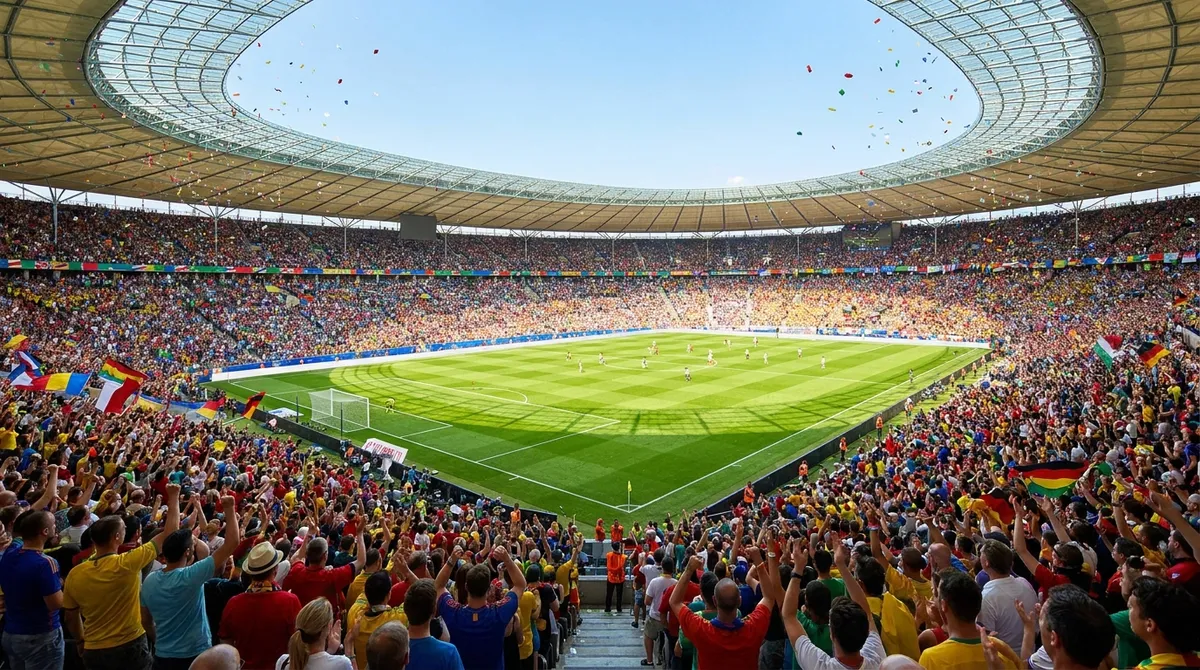
Spain's One-Goal Tournament: How Defensive Suffocation, Not Midfield Magic, Won the 2026 World Cup
July 20, 2026
Gooolll Desk
The narrative writes itself too easily: Spain, the possession professors, reclaimed the throne with their beautiful passing game. But that story is a comfortable lie. The truth is far more unsettling for traditionalists who still believe in attack-minded football as the apex of international soccer—Spain won by making football as suffocating as a packed defensive line can be, proving that at the elite level, the team that *stops* the opponent matters infinitely more than the team that dazzles with the ball.
Consider the defensive mathematics. Spain conceded just one goal across three group matches and the final. One. In a 48-team tournament where offensive firepower has exploded—Kylian Mbappé finished with 10 goals, Lionel Messi contributed 8—Spain's backline operated in a different dimension. The contrast is stark when placed alongside the noise surrounding high-scoring campaigns. Real Madrid's players accounted for more goal contributions across the competition than Spain's entire attacking threat, yet Spain lifted the trophy.
This wasn't luck or a soft draw. Argentina, the defending world champions, arrived at MetLife Stadium as legitimate favorites, carrying Messi into what everyone understood might be his final World Cup stage. ESPN's match ratings captured the suffocation: Messi earned a 3/10 as Argentina "barely approached Spain's goal in a one-sided" final. That phrase—*one-sided*—reveals the tactical gulf. Spain didn't win through penetration or creative breakthroughs. They won because Argentina couldn't function, couldn't breathe, couldn't find space to operate their counterattacking identity.
The defensive structure worked by rendering possession meaningless. Spain held the ball, moved it horizontally across the pitch, and forced Argentina into a reactive shape for 120 minutes. When Ferran Torres broke through in extra time to score the deciding goal, it wasn't the culmination of a sustained attacking sequence; it was the inevitable consequence of Argentina's defensive collapse under relentless pressure. The goal itself almost feels secondary to the tactical dominance that preceded it.
What makes this paradigm shift dangerous for teams clinging to attacking football orthodoxy is the replication factor. Rodri, Spain's midfield orchestrator, won the Golden Ball—recognition that controlling the tempo and closing passing lanes generates more value than creating them. Spain didn't need a world-class striker. They needed suffocation, and they executed it with surgical precision across seven matches without conceding more than once.
Argentina's frustration boiled over at full-time, with BBC reporting the "reaction is terrible" as players struggled to process the defeat. That anger speaks volumes: they came to play beautiful football against an opponent who had decided that football's beauty, at this level, lies in negation. Spain's persistence paid off not because they out-attacked their rivals but because they out-suffocated them. In 2026, defensive suffocation didn't just win the World Cup—it redefined what winning at the elite level actually means.
gooolll