GOOOLLL
Articles
← All articles
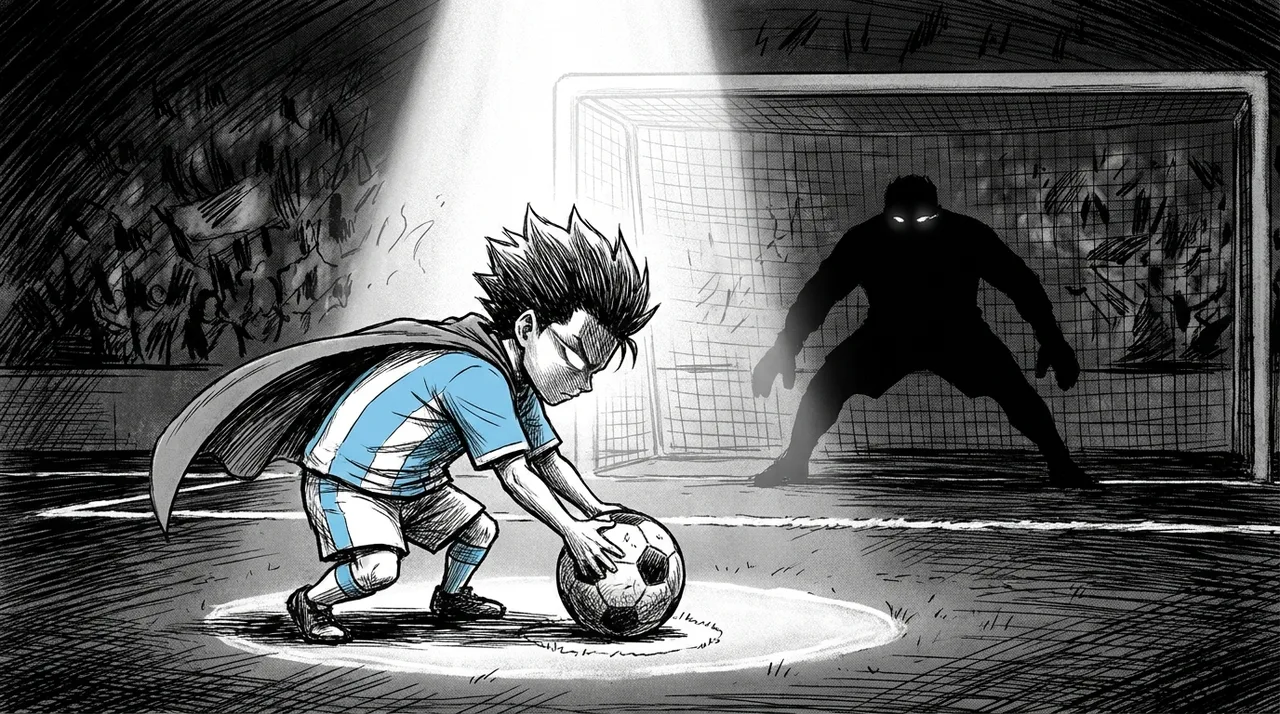
Messi's Penalty Clutch: Why Goal-Conversion Rate Matters More Than Total Shots in 2026
July 4, 2026
Gooolll Desk
Seven goals. One ahead of Mbappé. Two clear of Haaland and Kane.
The numbers are clean, but they don't tell you what's actually happening here.
Lionel Messi at 39 is not the Messi who tormented full-backs from the right wing, not the version who dribbled through entire defenses and invited you to marvel at the footwork. This Messi stands in the penalty area and waits. He finds space you didn't know existed, and when the ball arrives, it goes in. Seven times already at this World Cup, and counting — that's the part coaches are quietly losing sleep over.
Mbappé has six. Haaland five for Norway, Kane five for England. Respectable tallies, built on volume and elite positioning. But there's a difference between accumulating goals in a 48-team tournament's expanded group stage and *converting* when you cannot afford to miss. Messi's haul carries a specific gravity the raw numbers obscure: this is a player who has functionally reinvented himself around ruthlessness.
The 2026 format matters here. Compressing group play across three nations has squeezed the margins everywhere. VAR polices contact in the box with a consistency that's turned penalties into near-automatic currency — which means the elite finishers, the ones who don't flinch in those moments, have quietly become the tournament's most dangerous commodity. Argentina's 3-2 win, Colombia's 1-0 over Ghana, Portugal edging Croatia 2-1 — none of these were comfortable. But the teams still standing are the ones who took their moments and buried them.

Messi takes his moments and buries them.
What's striking is how un-Messi the method looks if you're expecting 2011 Barcelona. No long weaving runs finishing in the top corner. No flicks around defenders in full flight. Instead: positioning that seems almost boring until suddenly he's three yards clear, and it's already in the net. Against defenses built for the VAR era — deeper lines, tighter box marking, every set-piece rehearsed to death — that economy of movement is genuinely difficult to prepare for. Defenders have game-planned against his dribbling for fifteen years. Nobody quite built a system for the version that just *stands there and scores*.
Elsewhere in the tournament, Spain's Oyarzabal, Vinicius Junior for Brazil, Dembélé for France — all sitting on four goals, all fine players having fine tournaments. Germany lead Group E with six points, Spain top Group H with seven. Brazil and Switzerland have kept pace. The knockout bracket will be competitive. But Argentina carry something specific into it: a finisher whose seven-goal group stage wasn't built on volume or xG-friendly positions. It was built on decisions. Choose to finish. Make it count.
That quality has decided World Cups before. It tends to decide them in the rounds where one mistake means a flight home.
The seven goals are the story. The *how* behind them is the warning.
gooolll