GOOOLLL
Articles
← All articles
Mbappé's Quiet Ascent: How France's Star Stopped Chasing the Golden Boot and Started Winning Games
July 11, 2026
Gooolll Desk
Eight goals. Same as Messi. More than Haaland, more than Kane, more than everyone except the greatest player who ever lived.
By any reasonable measure, Kylian Mbappé is having a World Cup for the ages. So why does it feel like the most interesting thing about his tournament isn't the goals at all?
Haaland sits at seven, Kane at six. Both have built their reputations on a ruthless, almost monastic dedication to the ball hitting the net. Messi's eight are vintage — gravity-bending, defender-humiliating, the kind that earn folk songs in Buenos Aires. Mbappé's eight, though, come wrapped in something stranger. Something that looks, from a distance, almost like selflessness.
That's not a word you typically reach for when describing a 27-year-old who has spent a decade being treated as the most gifted attacker on the planet.
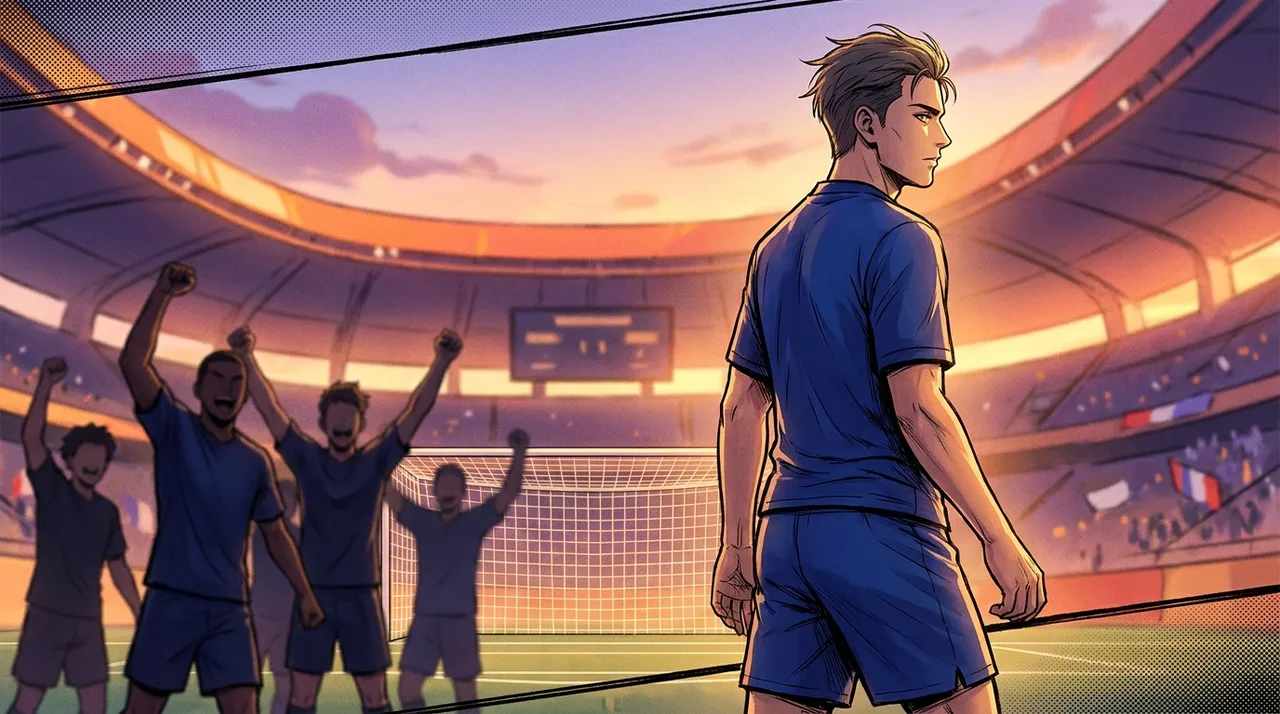
Watch how France moved against Morocco — a 2-0 win that looked comfortable and was — and you start to see it. Mbappé's positioning in that game wasn't about finding pockets, wasn't about the next cutback or the diagonal run defenders fear most. He was pulling shape apart. Drifting wide to create corridors he had no intention of using himself, manufacturing space for teammates and then, crucially, leaving them to use it. Ousmane Dembélé has five goals at this tournament. Five. That number doesn't happen without Mbappé deciding, somewhere along the way, that Dembélé's goals serve France better than his own.
Messi doesn't think that way. He can't — his genius is centripetal, it pulls the team toward him, and the team goes willingly because the outcomes justify the arrangement. Haaland barely registers his teammates exist until the cross arrives. Neither criticism nor compliment, just the reality of how elite predators function. They optimize for themselves because optimizing for themselves is what wins games.
Mbappé has apparently looked at that model and decided, at least for now, at least at this tournament, that it isn't enough.
A 48-team World Cup is a different beast. The group stage math is labyrinthine, knockout margins are brutal, and a team built around one man's scoring record is a team one bad game from elimination. France haven't just survived — they've looked, in patches, genuinely frightening. That's a collective thing. Mbappé seems to understand it's a collective thing.
None of this makes for breathtaking highlight packages. Haaland's finishes loop endlessly on social media because they look like inevitabilities — you watch them the way you'd watch a guillotine fall. Messi's get the treatment they deserve: slow-motion, orchestral, reverential. Mbappé drifting into a wide channel to open a passing lane doesn't trend.
But France are still here. And if they're still here when it matters most — when the last whistle sounds in one of the three host stadiums — it'll be partly because their best player decided that winning was more important than being seen to win.
That's a harder thing to choose than it sounds.
gooolll