GOOOLLL
Articles
← All articles
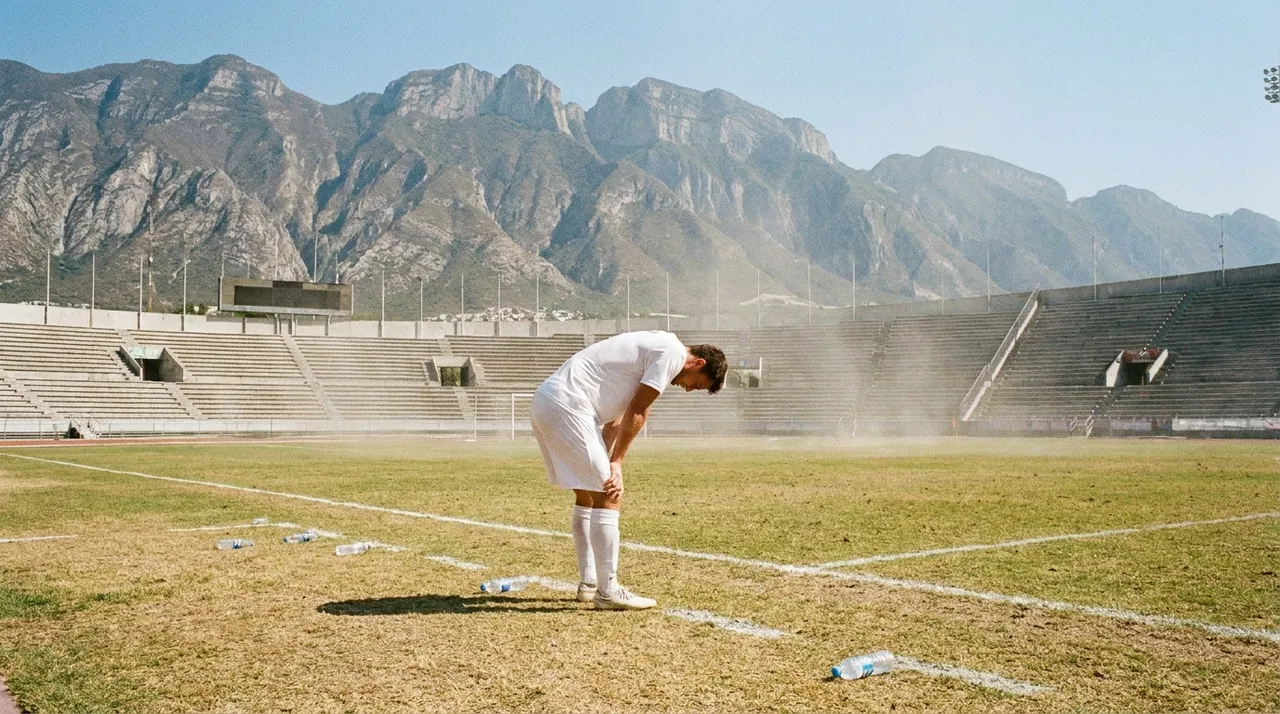
Group A: Why Monterrey's Altitude and Heat Are Breaking Europe's Pressing Game
July 6, 2026
Gooolll Desk
The scoreboard tells one story. Mexico's 9 points, South Africa's 4, Korea Republic's 3, Czechia's lonely 1. Tidy numbers. But spend any real time inside the Estadio in Monterrey and you realize the standings are almost beside the point. What's actually happening here is stranger and more interesting than a table can convey.
Five hundred meters of elevation doesn't sound like much. It isn't, really — not compared to Bogotá or Quito, where altitude becomes a full-blown physiological crisis. But pair it with 35°C and the kind of humidity that makes a kit feel like wet concrete by the half-hour mark, and the arithmetic of modern pressing falls apart completely. The five-second squeeze, the coordinated press triggers, the four-man suffocation trap that's been the calling card of every serious European side for the last decade — all of it turns against you in this city. Teams that built their identity on pressing opponents into mistakes arrive in Monterrey and discover they're the ones gasping.
Mexico hasn't thrived despite the conditions. They've thrived *because* of them. Their structure was never built around the European press-and-recover model to begin with. They sit, they shape, they defend with organization rather than urgency — and in northern Mexico's thin, humid air, that looks less like a limitation and more like a masterstroke. A +6 goal difference and maximum points from three matches. That's not a fluke. That's a team playing in an environment that amplifies everything they're already good at.
Then look at Czechia. One point, -4 goal difference, three matches played. A side whose entire system is predicated on the ability to compress space in the final third, to sustain high lines and coordinated pressure for 90 minutes. In Hamburg or Prague, that works. In Monterrey, it dies somewhere around the 25th minute, when legs start to feel foreign and lungs stop cooperating. The system doesn't just underperform — it inverts. The press that was supposed to suffocate opponents starts suffocating the team running it.
Paraguay in Group D — 4 points, still in contention — tells a similar story from a different angle. Compact, laterally organized, built to absorb rather than chase. They don't ask their players to cover enormous ground in heat that could kill a horse. It accumulates. Belgium's 5 points in Group G, Spain's 7 in Group H — both sides have had to recalibrate mid-tournament, shedding the pressing intensity that got them here and finding something more sustainable instead.
The top scorers cluster tellingly. Julián Quiñones sits on 4 goals for Mexico — a number that says as much about context as it does about quality. Sarr, Oyarzabal, Bellingham, all also on 4. But count how many of those came in knockout matches, in cooler cities, against sides that hadn't just spent three group games trying to press at altitude in midsummer heat. The comparison isn't quite fair. That's precisely the point.
Even Mexico's 2-3 result — the loss in the numbers — actually reinforces the thesis rather than undermining it. They conceded three but still scored two. The system functioned: measured transitions, clinical finishing, no desperate chasing. A side committed to relentless pressing in that scoreline, in that heat, would have shipped five.
Monterrey hasn't made Mexico supernaturally good. It hasn't exposed European sides as frauds, either. What it's done is more surgical than that — it's neutralized the one weapon that's dominated the game for a decade, the one tactical idea that everyone from Klopp to Nagelsmann to Arteta has built their philosophy around. Relentless pressing is brilliant. It just needs oxygen. In the thin, sweltering air of northern Mexico, the old rules of engagement simply do not apply.
gooolll