GOOOLLL
Articles
← All articles
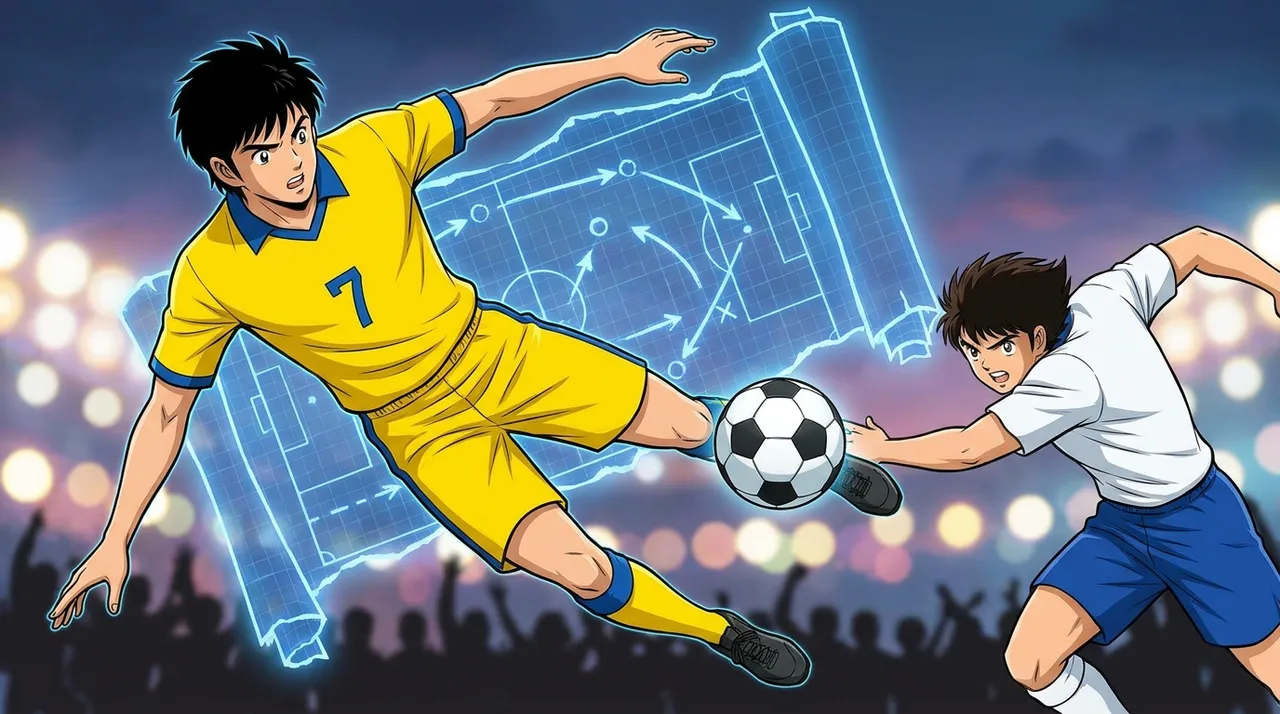
Colombia Read Ghana's Blueprint and Tore It Apart
July 3, 2026
Gooolll Desk
Every team at a 48-team World Cup eventually meets the opponent who has done the homework. For Ghana, that reckoning came on July 3rd, and it was thorough.
Ghana's group-stage identity was never a secret. Long balls, physical transitions, grinding chaos into chances—it's a recognizable game, and it worked. They advanced. But Colombia arrived at the Round of 16 not merely prepared to handle it. They arrived having built an entire defensive structure around the assumption that Ghana would do exactly what Ghana always does. And Ghana obliged them, repeatedly, until it was over.
The killing ground was the transition zone. Each time a Ghana defender launched the ball upfield—and they launched it constantly—they found Colombia's midfield already shutting the landing area down. No second balls. No loose scraps to contest. The geometry was deliberate: Colombia had mapped the flight paths and stationed bodies accordingly. This wasn't elite individual defending. It was collective intelligence applied to a scouted weakness. Ghana's direct play survives on chaos; Colombia brought order to every pocket where that chaos was supposed to live.
The 48-team format offers no grace period for recalibration. Squads arrive at knockout football still running the habits they built across three group games, with barely enough time between fixtures to sleep, let alone rethink a system. Ghana's coaching staff had committed fully to the vertical approach. When Colombia neutralized it, there was no credible alternative vocabulary available—no pivot that carried genuine tactical weight. Plan A met a defense assembled specifically to kill Plan A, and there was nothing waiting behind it.

What Colombia demonstrated wasn't superiority in possession or midfield numbers. It was something more precise: the understanding that adaptive defensive structures—shapes that compress and expand in direct response to what the opponent is doing rather than operating on fixed principles—have a pronounced edge in this tournament's compressed, unforgiving environment. Ghana's long-ball game needed space to breathe in those transition corridors. Colombia simply refused to leave any.
That's the part that will linger for Ghana. They weren't overwhelmed in an open, flowing contest. They were methodically taken apart by a team that treated their tactical identity as a problem with a knowable solution—and then solved it. Repetition isn't strategy. At this pace, at this stage, it's an invitation.
Colombia moves on. Ghana goes home early, undone not by a lack of effort or quality, but by the one thing the modern knockout game punishes above all else: being entirely readable.
gooolll