GOOOLLL
Articles
← All articles
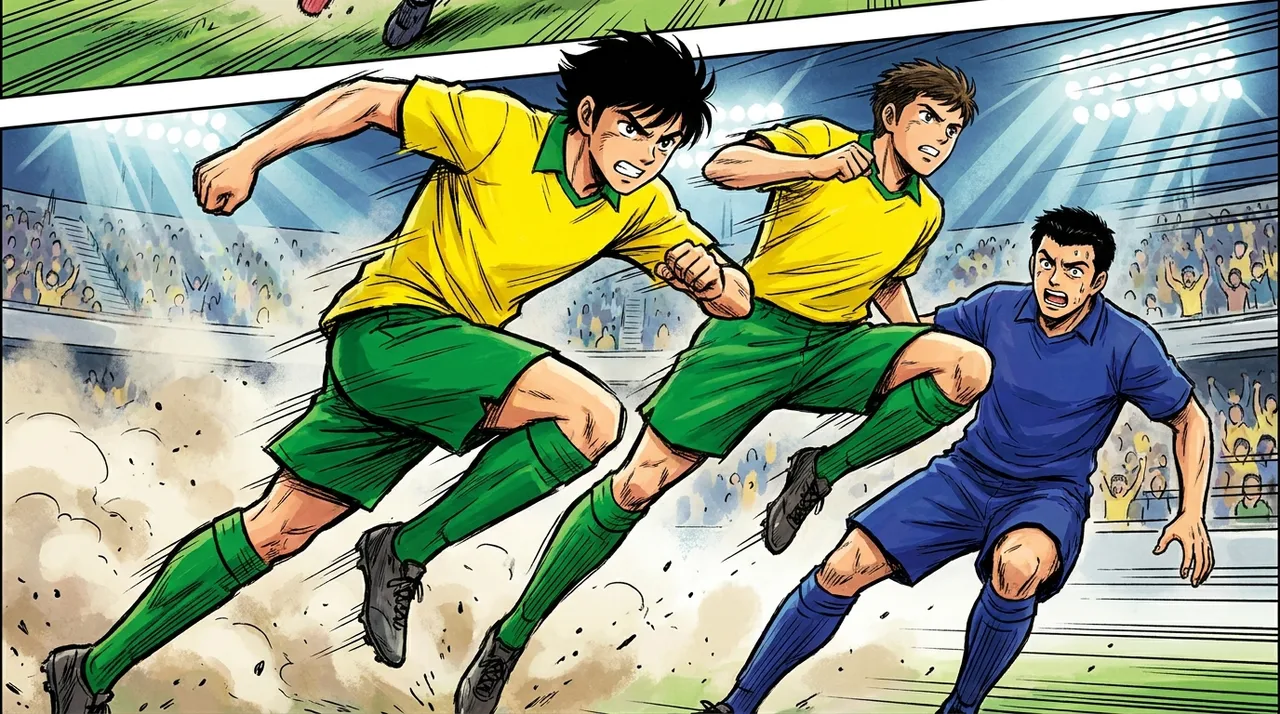
Brazil's Vinicius and Cunha Strike Fear into Japan's Rigid Backline
June 29, 2026
Gooolll Desk
There's a particular kind of dread that sets in when a defensive unit realizes the threat in front of them isn't just one man. Japan knows this feeling now.
Vinicius Junior has four goals. Matheus Cunha has three. Brazil has barely broken a sweat.
The Seleção's group-stage rotation looked, at the time, like the kind of managerial gamble that pundits file away to use against you later. Rest your stars, trust your depth, distribute the minutes—it either vindicates you completely or it costs you the tournament in round one. Carlo Ancelotti, or whoever sits in that chair, chose abundance over caution, and the math has come back beautiful. Seven combined goals between two forwards who weren't even guaranteed starts. Lionel Messi leads this tournament with six goals and the world is paying attention; Brazil has quietly assembled a two-headed monster of their own.
What makes Cunha genuinely dangerous isn't his goal tally—it's where that tally came from. Rotation minutes. Sub appearances. Platform moments rather than ownership moments. A player who scores when he's proving himself rather than coasting through an expectation is a player in form, and in form is exactly how you want your forwards walking into a knockout fixture.
Japan's problem is structural. Their defensive shape works—genuinely works—against most teams. The compressed lines, the disciplined block, the way they funnel teams into predictable corridors. It's a system built to neutralize chaos, and it does that well. Against orchestrated, multi-layered pressure though, that same rigidity becomes a liability. You can't be everywhere at once. You choose your shape or you choose your man, and Brazil will make that choice excruciating.
Vinicius doesn't wait for defenders to settle. His acceleration forces decisions in fractions of seconds, and wrong decisions at that pace become goals. He pulls defenders toward him like gravity, opening pockets behind and beside him that simply didn't exist three seconds earlier. Japan's backline will know he's coming, will have watched every run, every touch, every piece of film—and will still be a half-step slow.
Then Cunha arrives from deep. Second wave. Different angle. Same problem.
Brazil didn't stumble into this dynamic. They engineered it across the group stage, giving multiple attackers live minutes in real competition, letting them sharpen their edge against opposition that actually mattered. The depth isn't theoretical anymore. It's been tested. It's been proven. A squad that discovers what it can do during a tournament is dangerous; a squad that already knew and spent three games confirming it is something else entirely.
Japan has earned their place here. Their defensive identity isn't a flaw—it's gotten them this far. But there's a version of defensive football that absorbs one-dimensional pressure and there's a version that handles what Brazil is about to bring, and those are two very different documents.
When Vinicius hits the accelerator down the left and Cunha ghosts in from the opposite side, Japan's shape won't bend gracefully. It'll crack.
gooolll